The curtain business increasingly requires us to address issues related to room acoustics. People often turn to curtains to solve problems that construction methods haven’t been able to sort out.
Before you start shopping for acoustic fabrics, make sure you know exactly what problem you’re trying to solve. One of the biggest mistakes people make when trying to improve acoustics is failing to recognise the difference between sound absorption and sound insulation.
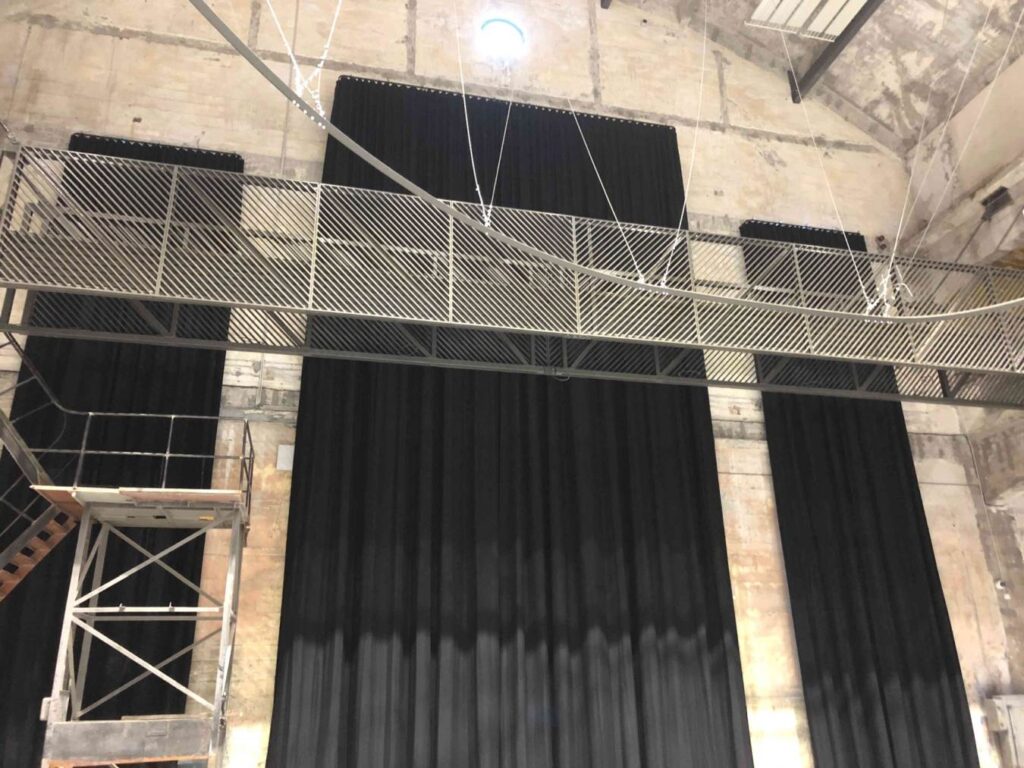
If the room has a lot of echo and even the slightest sound becomes distracting noise, you should use sound-absorbing materials. This tends to be the case in large open spaces with a lot of smooth, hard surfaces.
By using sound-absorbing materials in rooms like these, we can alter the reverberation time and, consequently, the room’s function.
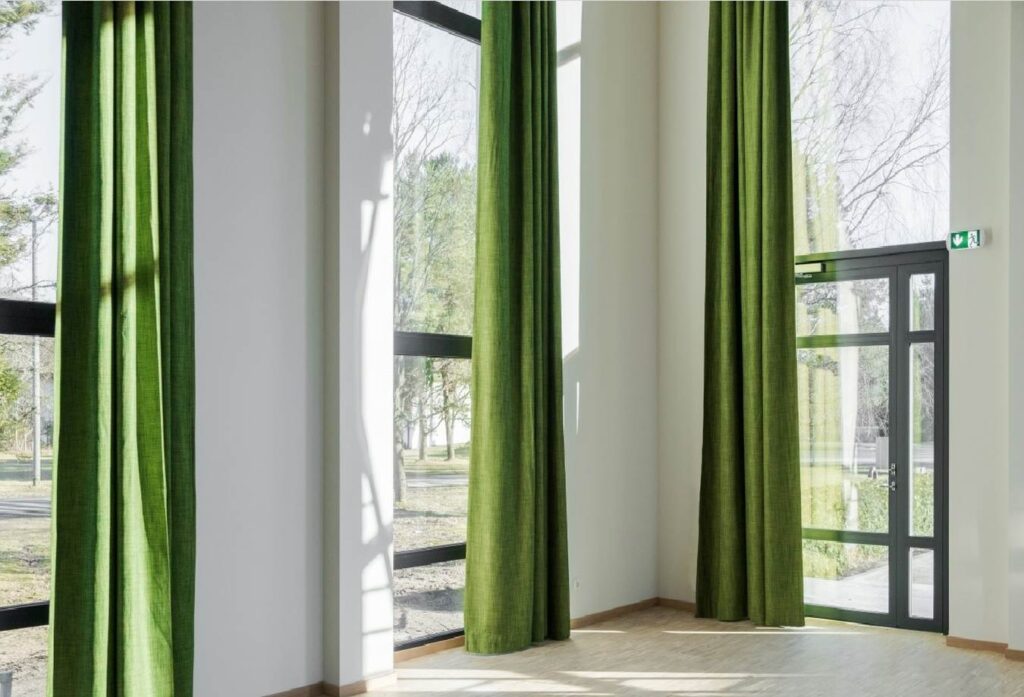
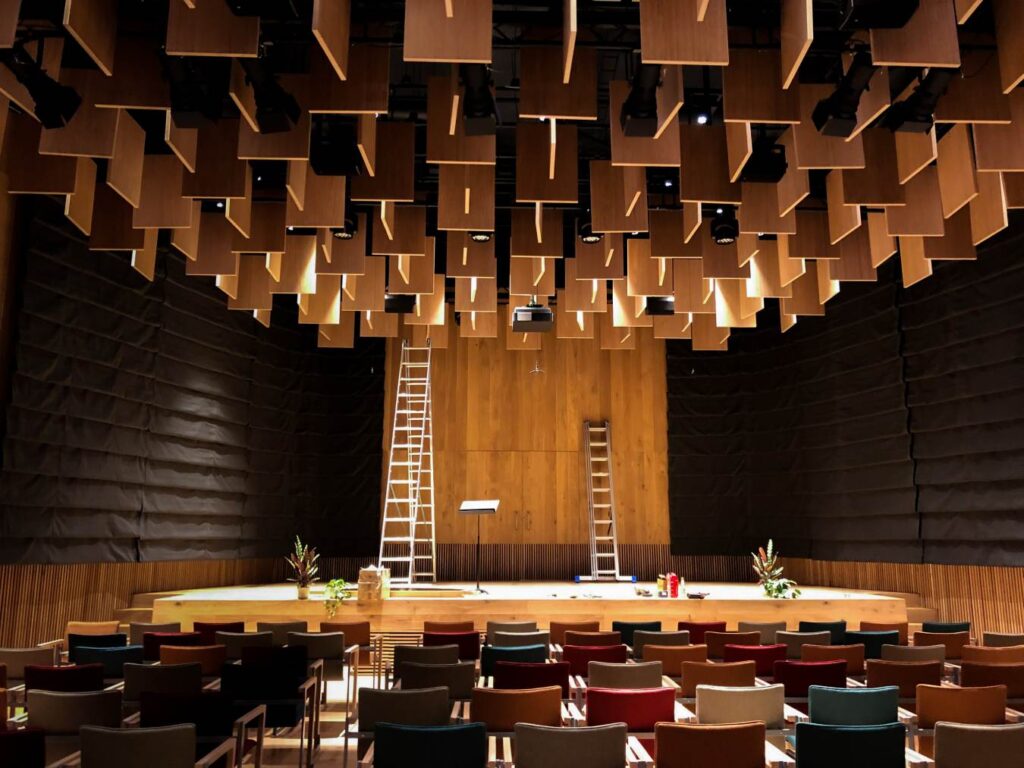
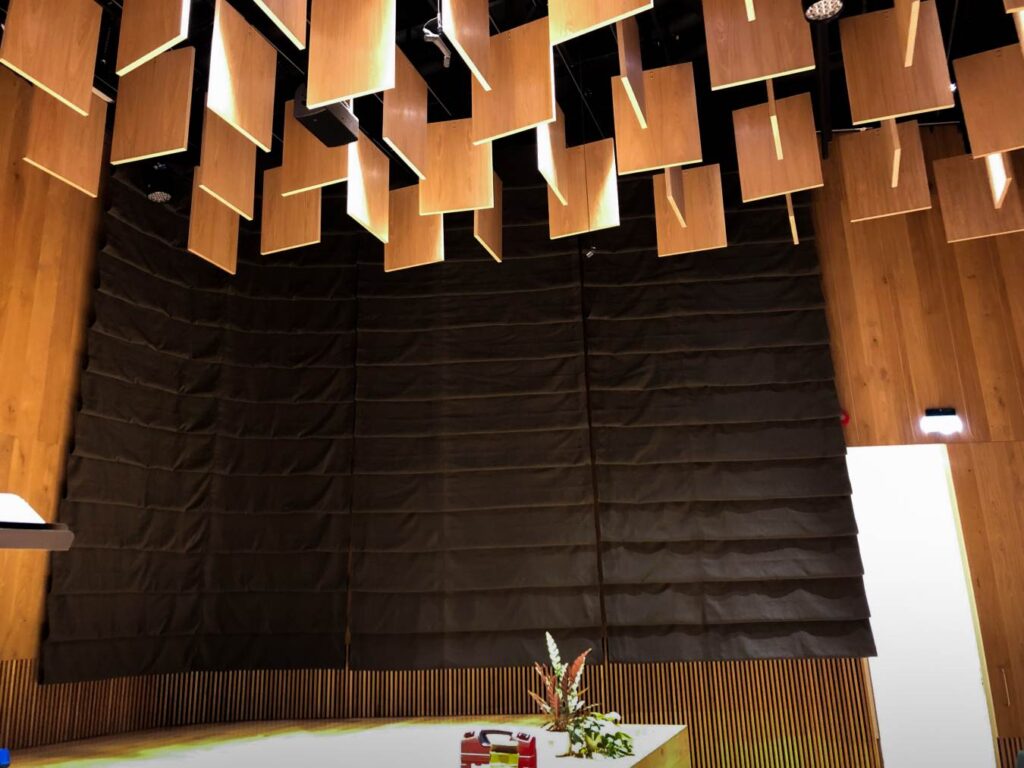
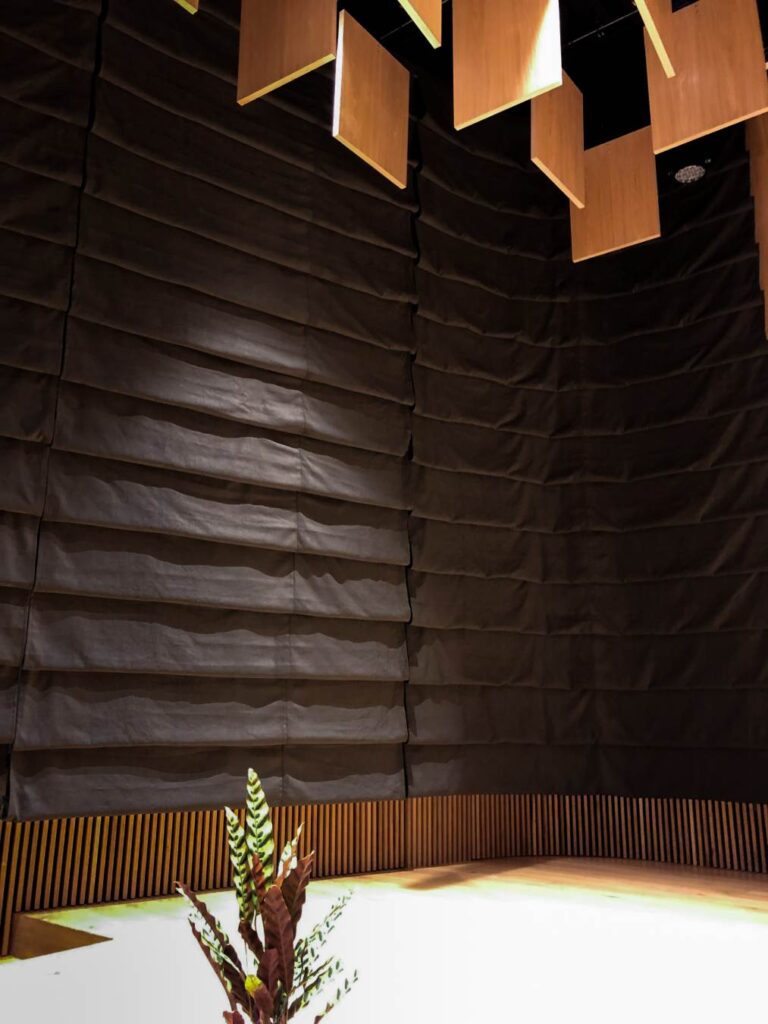
That was our approach at the Arvo Pärt Centre, for example, with its purpose-built hall designed for creating music. To allow the same hall to be used for something like film screenings, we covered all the walls with sound-absorbing acoustic curtains. Now, when the curtains are lowered, it alters the length of sound waves so that the hall can effectively be used for two very different purposes.
Sound absorption and insulation: how are they measured, and what do they indicate?
The value used to measure sound absorption capacity is denoted by alpha. Alpha can be between 0 and 1. Zero means here that no sound is absorbed at all – everything is reflected back – and 1 means that all sound is absorbed and nothing is reflected back.
The sound absorption rating system is designed to aid in comparing materials. These ratings aren’t fixed values, as audio frequency plays a significant role in addition to the fabric’s properties.
Fabrics are categorised into sound absorption classes A–E based on their sound absorption coefficient:
- class A acoustic fabrics absorb 100–95–90% of sound
- class B acoustic fabrics absorb 85–80% of sound
- class C acoustic fabrics absorb 75–70–65–60% of sound, etc.
The same material can fall into different sound absorption classes depending on whether the fabric hangs flat or is pleated.
It’s a different story if you want to prevent sound moving from one area to another. Lower frequency sound is more difficult to block than higher frequency sound.
There is also a system for assessing the sound insulation performance of materials, but as with the sound absorption system, it’s primarily intended for comparing different materials The sound insulation index is denoted by R and expressed in decibels.
Thicker fabrics are undoubtedly more effective at blocking sound waves. In fact, it’s often best to use multiple layers to get the best results. At the same time, make sure that the layers are not too close together. In many cases, it’s best to space the two curtains about 10 cm apart.
At the Aastakäik curtain showroom, you’ll find a wide range of fabrics to solve both problems. We even have thin, transparent fabrics available as sound-absorbing options.
Author: Thea Nugis, Aastakäik OÜ
Tips for using fabrics to address acoustic problems